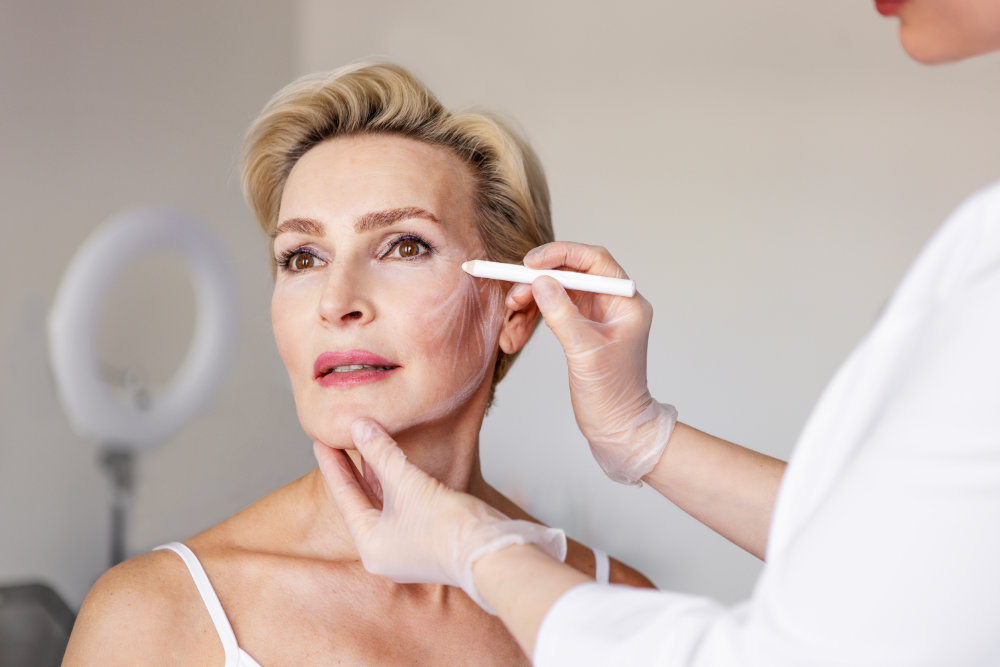
The lower face and neck often show signs of aging first due to factors like gravity and the quality of the skin in these areas. A facelift lifts and repositions the tissue to help with loose skin along the jawline and deep folds around the mouth, and we use techniques that keep your appearance natural rather than creating a tightened or pulled look. At Tarola Plastic Surgery, Dr. Tarola will help you decide whether his facelift surgery in Murfreesboro, TN, is right for you, basing the decision on your health and your goals.
What Makes Someone a Facelift Candidate?
Dr. Tarola looks at four different areas that impact candidacy for a facelift.
Anatomy
Candidates for facelift surgery typically have excessive loose skin and jowls caused by reduced elasticity, along with neck laxity from weakening support beneath the skin. Dr. Tarola also considers facial bone structure and the amount of skin sagging, since very mild sagging and laxity can often be treated non-surgically.
Health
Candidates should be in good overall health, and any ongoing conditions should be well managed before moving forward with a facelift surgery. Healthy circulation and a strong immune system help incisions close and tissues recover faster. A full medical evaluation will be part of your consultation to confirm that you are healthy enough for the surgery.
Expectations
A facelift refreshes your appearance while keeping your features recognizable. Dr. Tarola uses deep plane techniques, which have shown a patient satisfaction rate above 94 percent in reviews of modern facelift outcomes. However, it is important to have a thorough understanding of what this surgery can and cannot change. You can discuss expectations with Dr. Tarola to make sure they match up with what the surgery offers.
Readiness
Readiness means having time to heal and support at home while you recover. You can expect to resume some light activities within a week, but at first, you will need help around the house so you can get the rest you need. Part of getting ready will be to arrange a ride home and have someone stay with you for the first night.
What Signs of Aging Can a Facelift Treat?
- Jowls and Lost Jawline Definition: Soft pockets form along the jaw as tissue descends with age. A facelift lifts and secures these tissues.
- Deep Nasolabial Folds and Marionette Lines: You may notice creases from your nose to your mouth in your thirties that get deeper over the next decade or two. These can be addressed through facelift surgery.
- Loose Skin and Bands in the Neck: A facelift also treats some sagging in the neck. Often a neck lift is combined with a facelift if there is more loose skin or vertical bands in the neck area.
- Midface Volume Loss: Fat pads in the face can begin to descend with age, but a facelift can help lift them back into position to improve midface volume loss.
What Does a Facelift Not Address?
A facelift will not smooth fine lines or address sun damage and surface texture. These concerns respond better to laser treatments and medical skincare that focus on the surface of the skin. This procedure also only works on the lower half of the face and does not raise heavy brows or correct sagging eyelids, concerns that are better treated with a brow lift or eyelid surgery.
If fat pads in the face have diminished rather than just descending, your face may also benefit from fat transfer to rebuild these areas of volume. Certain procedures can be combined to treat several of these at once.
When Is the Best Age for a Facelift?
Most patients are in their 40s through 60s before they start seeking information about facelift surgery because this is often when sagging and folds become more noticeable. However, there is no set age for a facelift. What matters more is factors like your skin’s elasticity and the degree of visible laxity, and your body’s ability to safely tolerate anesthesia and the surgery itself, along with the recovery process. Younger patients with early changes may be able to choose a less invasive procedure called a mini facelift, which involves less correction and a smaller incision.
Health Factors That Affect Facelift Candidacy
Chronic and Uncontrolled Medical Conditions
Conditions such as diabetes or high blood pressure raise surgical risks when poorly controlled, while managing these conditions well can make you a candidate for the surgery. Dr. Tarola may coordinate with your physician and look more deeply into your medical conditions before clearing you for surgery.
Bleeding Disorders and Heart Conditions
Some disorders can affect clotting and raise the risk of bleeding during and after surgery, and certain heart conditions can make anesthesia unsafe. We carefully assess these issues to see whether they rule out surgery.
Medications and Supplements
If you are taking blood-thinning medications, Dr. Tarola will talk to you about how these can affect surgery. Often, medications and supplements that thin the blood can be paused before surgery, but this is something you will need to discuss with your prescribing physician. Before surgery, you will receive a packet listing which over-the-counter products to stop and when.
Smoking and Nicotine Use
Nicotine narrows the small blood vessels that feed healing skin, which puts the lifted tissue at risk of dying. A meta-analysis of flap surgery found that smokers who stopped for only a day after surgery lost tissue nearly five times as often as non-smokers. Dr. Tarola asks patients to quit at least four weeks before surgery.
Weight Stability
Large weight shifts in either direction can change the way your facial skin appears, and you will have a discussion about any weight loss goals you may have along with your overall history. If you are in a stable place with your weight, you will be a better candidate for a facelift surgery.
Your Facelift Candidacy Checklist
- Your Concerns Are Structural
- Your Health Is Stable
- You Are Nicotine-Free
- Your Weight Is Steady
- Your Goals Are Realistic
- Your Timeline Has Room to Heal
Schedule a Facelift Consultation in Murfreesboro
At Tarola Plastic Surgery, Dr. Tarola performs each facelift in a private operating room he designed inside his Murfreesboro practice, with anesthesia and recovery staff he knows personally. He trained in plastic surgery at Vanderbilt University Medical Center and is board certified by the American Board of Plastic Surgery. Patients traveling from Nashville, Hendersonville or beyond can ask about our out-of-town program. Call 615-713-1695 or fill out an online form to schedule.